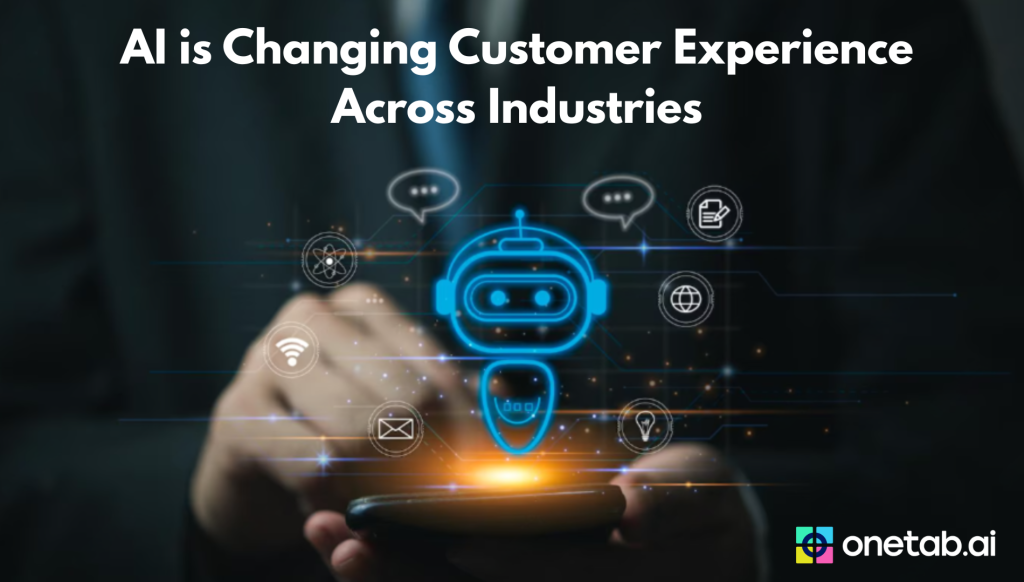
Customer expectations have evolved rapidly in the digital era. Today’s customers expect fast responses, personalized interactions, and seamless support across channels. Traditional customer service models often struggle to keep up with these expectations due to high ticket volumes, limited manpower, and fragmented systems.
This is where Artificial Intelligence (AI) is transforming the landscape. AI-powered technologies are helping organizations deliver smarter, faster, and more personalized customer experiences across industries.
In this blog, we explore how AI is redefining customer experience and why businesses are increasingly adopting AI-driven solutions.
The Shift Toward AI-Powered Customer Experience
Customer experience (CX) has become a major differentiator for businesses. Companies that provide efficient and personalized experiences build stronger customer relationships and long-term loyalty.
AI enables organizations to:
- Automate repetitive support tasks
- Understand customer behavior through data analysis
- Provide real-time responses and recommendations
- Deliver personalized experiences at scale
Instead of relying solely on human agents, businesses are now integrating AI-driven assistants, predictive analytics, and intelligent automation to enhance customer interactions.
Key Ways AI Is Transforming Customer Experience
1. Intelligent Chatbots and Virtual Assistants
AI-powered chatbots can handle thousands of customer queries simultaneously without delays. These assistants are capable of understanding customer intent using Natural Language Processing (NLP) and providing instant responses.
Businesses are using AI chatbots to handle tasks such as:
- Answering frequently asked questions
- Assisting with product inquiries
- Tracking orders and service requests
- Providing account and billing information
This reduces response time while allowing human agents to focus on more complex issues.
2. Personalized Customer Interactions
Modern customers expect personalized experiences rather than generic interactions. AI analyzes customer data, purchase history, browsing patterns, and preferences to deliver tailored recommendations.
For example, AI systems can:
- Suggest relevant products or services
- Personalize marketing campaigns
- Recommend support solutions based on previous interactions
This level of personalization helps companies improve engagement and increase customer satisfaction.
3. Faster and More Efficient Customer Support
Customer service teams often deal with high volumes of support tickets. AI helps streamline this process by automatically categorizing and prioritizing customer requests.
AI-driven support systems can:
- Route tickets to the appropriate department
- Identify urgent issues faster
- Provide suggested responses to support agents
As a result, businesses can significantly reduce response time and improve service quality.
4. Predictive Customer Insights
AI doesn’t just respond to customer queries, it can also predict customer needs.
By analyzing historical data and behavioral patterns, AI systems can identify:
- Customers at risk of leaving
- Potential service issues before they escalate
- Opportunities for cross-selling or upselling
This proactive approach allows companies to solve problems before customers even raise them.
5. Omnichannel Customer Experience
Customers interact with businesses through multiple channels such as websites, mobile apps, emails, and social media.
AI helps unify these interactions by creating a consistent omnichannel experience. AI systems can track customer conversations across platforms and provide agents with a complete interaction history.
This ensures customers don’t have to repeat their issues every time they switch channels.
AI-Powered Customer Experience Across Industries
AI is not limited to a single sector. Organizations across industries are leveraging AI to enhance customer interactions.
Retail and E-commerce
Retail companies use AI to provide personalized product recommendations, automate support queries, and optimize shopping experiences.
Banking and Financial Services
Banks use AI-powered assistants to help customers with account queries, fraud detection, and financial advice.
Healthcare
AI improves patient experience by assisting with appointment scheduling, answering medical queries, and streamlining administrative processes.
Telecommunications
Telecom companies use AI to manage large volumes of service requests, troubleshoot technical issues, and improve response time.
The Role of AI Platforms in Customer Experience
Advanced AI platforms are enabling businesses to integrate multiple capabilities into a single system. These platforms combine technologies such as:
- AI-powered voice agents
- Resume and document parsing
- OCR-based data extraction
- Intelligent workflow automation
- NLP-driven conversational AI
Platforms like Onetab AI are helping organizations streamline operations and improve service delivery by integrating these AI capabilities into everyday workflows.
With AI-driven automation, companies can reduce manual effort, improve response accuracy, and deliver better experiences to both customers and employees.
The Future of AI in Customer Experience
The role of AI in customer experience will continue to grow as technology advances. Future developments may include:
- More human-like conversational AI
- Emotion detection during customer interactions
- Hyper-personalized experiences powered by predictive analytics
- Fully automated customer service ecosystems
Organizations that adopt AI early will gain a competitive advantage by delivering faster, smarter, and more personalized services.
Conclusion
AI is fundamentally transforming how businesses interact with their customers. From instant support and personalized recommendations to predictive insights and omnichannel engagement, AI is redefining the customer experience across industries.
For organizations looking to stay competitive, investing in AI-driven solutions is no longer optional, it is essential.
Platform like Onetab AI are making it easier for companies to implement intelligent automation and improve both operational efficiency and customer satisfaction.
As AI technology continues to evolve, businesses that embrace it will be better equipped to meet the growing expectations of modern customers.