Artificial Intelligence is transforming how we work, learn, and make decisions. From automation in operations to intelligent tools in recruitment, marketing, finance, and development, AI is becoming part of everyday workflows.
But despite the rapid growth of AI, one thing remains clear: the future of work isn’t AI versus humans, it’s humans working with AI.
As technology evolves, the most valuable professionals will be those who can adapt, learn continuously, and combine human intelligence with AI capabilities.
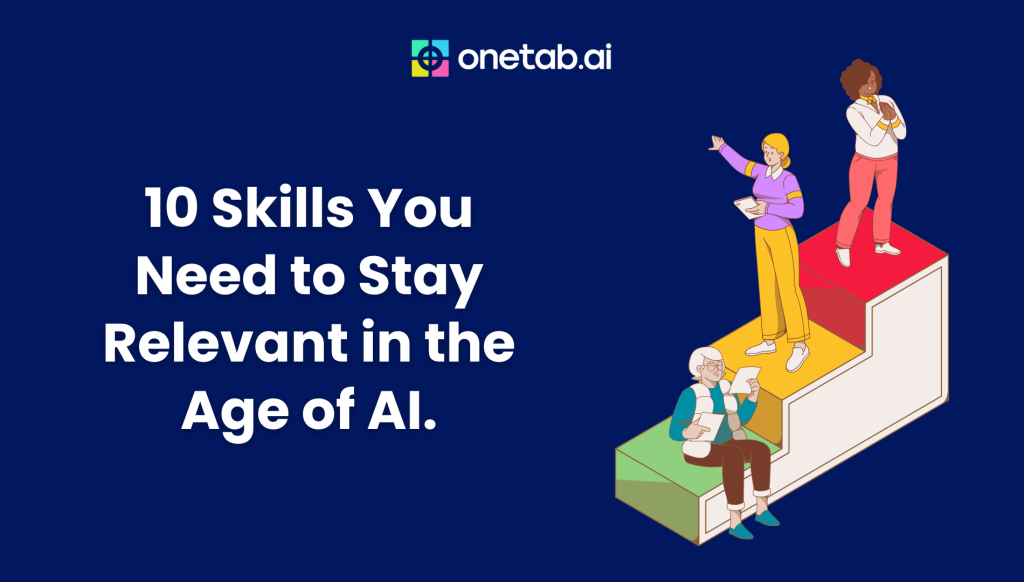
Here are 10 future-oriented skills that can help you stay relevant and thrive in an AI-driven world, along with industries where these skills are especially valuable.
1. AI Literacy
Just like basic computer literacy became essential in the digital era, AI literacy is becoming a foundational skill.
AI literacy means understanding:
- What AI can and cannot do
- How AI systems make decisions
- Where AI can improve workflows
You don’t need to become a data scientist, but having a basic understanding of AI tools and concepts will help you use them effectively in your work.
Industries where this skill is valuable:
- Technology
- Human Resources
- Marketing
- Finance
- Healthcare
- Operations & Business Management
2. Data Literacy
AI systems rely heavily on data. The ability to interpret, analyze, and question data is becoming increasingly important across industries.
Data literacy includes:
- Understanding data trends
- Interpreting dashboards and reports
- Making data-informed decisions
Professionals who can translate data insights into actionable strategies will have a strong advantage.
Industries where this skill is valuable:
- Finance and Banking
- Marketing and Advertising
- E-commerce
- Healthcare Analytics
- Supply Chain and Logistics
- Consulting
3. Prompt Engineering and AI Interaction
As generative AI tools become more common, knowing how to communicate effectively with AI systems is an emerging skill.
Prompt engineering involves:
- Writing clear instructions for AI tools
- Structuring queries to get better results
- Iterating and refining outputs
People who can guide AI tools effectively can often produce better results in less time.
Industries where this skill is valuable:
- Content and Media
- Software Development
- Marketing
- Product Management
- Customer Support
- Research
4. Critical Thinking
AI can generate answers quickly, but it cannot always verify accuracy, context, or strategic relevance.
This makes critical thinking more important than ever.
Professionals must be able to:
- Evaluate AI-generated insights
- Identify errors or biases
- Make informed decisions based on AI outputs
Human judgment will remain essential in AI-supported environments.
Industries where this skill is valuable:
- Law and Legal Services
- Finance
- Policy and Governance
- Journalism and Media
- Consulting
5. Creativity
AI is excellent at analyzing patterns, but original thinking and creative problem-solving remain uniquely human strengths.
Creativity will be essential for:
- Innovation
- Strategic thinking
- Product development
- Marketing and storytelling
The ability to combine AI insights with creative thinking can lead to powerful new ideas and solutions.
Industries where this skill is valuable:
- Advertising and Branding
- Product Design
- Entertainment and Media
- Entrepreneurship
- Marketing
6. Emotional Intelligence
AI can analyze data, but it cannot fully replicate human empathy, relationship-building, and emotional awareness.
Emotional intelligence will remain crucial in areas such as:
- Leadership
- Team collaboration
- Negotiation
- Customer relationships
As AI automates technical tasks, human-centered skills will become even more valuable.
Industries where this skill is valuable:
- Human Resources
- Sales and Business Development
- Leadership and Management
- Healthcare
- Customer Experience
7. Adaptability and Continuous Learning
The pace of technological change is accelerating. Skills that are relevant today may evolve rapidly in the coming years.
Professionals who thrive in the AI era will be those who:
- Stay curious
- Learn new tools regularly
- Adapt to changing workflows
In many ways, the ability to learn quickly may become the most important skill of all.
Industries where this skill is valuable:
- Technology
- Startups
- Consulting
- Digital Marketing
- Product Development
8. Cross-Disciplinary Thinking
AI is impacting nearly every industry, from healthcare and finance to HR and logistics.
This creates a growing need for professionals who can connect ideas across different domains.
For example:
- Combining AI with HR operations
- Using AI in marketing analytics
- Applying automation in supply chains
People who understand both technology and business context will be especially valuable.
Industries where this skill is valuable:
- Business Strategy
- Operations Management
- HR Technology
- Product Management
- Consulting
9. Problem-Solving with AI Tools
Instead of viewing AI as a replacement, forward-thinking professionals are learning how to use AI as a problem-solving partner.
This includes:
- Identifying tasks that can be automated
- Using AI tools to analyze complex information
- Designing efficient workflows
Knowing when and how to apply AI can significantly improve productivity.
Industries where this skill is valuable:
- Operations and Business Process Management
- HR and Recruitment
- Customer Support
- IT and Software Development
- Finance
10. Ethical Awareness in AI
As AI adoption grows, questions around fairness, bias, transparency, and data privacy are becoming increasingly important.
Professionals should understand:
- Ethical implications of AI use
- Responsible data practices
- Potential bias in AI systems
Organizations will increasingly look for individuals who can balance innovation with responsible AI usage.
Industries where this skill is valuable:
- Government and Public Policy
- Legal and Compliance
- Technology Development
- Healthcare
- Financial Services
The Future of Work: Human + AI
AI will undoubtedly automate many repetitive and administrative tasks. But rather than eliminating human roles, it is more likely to change how we work and the skills we prioritize.
Routine work may decline, but skills such as:
- Creativity
- judgment
- communication
- strategic thinking
will become even more valuable.
The professionals who thrive in the AI era will be those who embrace technology while strengthening uniquely human capabilities.
Final Thoughts
The rise of AI does not mean the end of human relevance in the workplace. Instead, it signals a shift toward new skill sets and new ways of working.
By developing AI literacy, critical thinking, creativity, and adaptability, professionals can position themselves to succeed in an increasingly AI-driven world.
In the end, the future won’t belong only to those who understand AI, it will belong to those who know how to work alongside it.