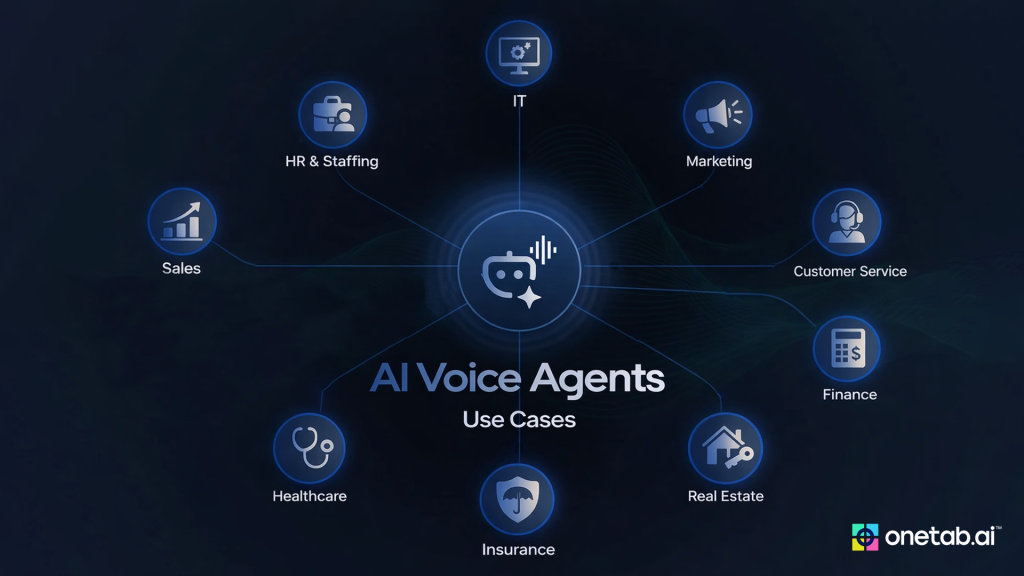
Voice AI is transforming the way businesses operate. By automating repetitive tasks, collecting structured data, and engaging customers or employees in real-time, it is becoming the first point of contact across departments and industries.
By Department
1. HR & Staffing
- Use Case: Pre-screening calls, interview scheduling, and candidate follow-ups.
- Benefit: Reduces recruiter workload, improves candidate engagement, and speeds up hiring.
- Example: AI voice agents call candidates to gather availability and qualifications, ranking them for recruiter review.
2. Sales
- Use Case: Qualifying leads, outbound follow-ups, and appointment setting.
- Benefit: Increases sales efficiency, reduces missed opportunities, and frees sales reps for high-value tasks.
- Example: AI voice reaches out to cold leads, collects intent signals, and schedules calls for human sales reps.
3. IT
- Use Case: Helpdesk ticket intake, password resets, and system troubleshooting.
- Benefit: Reduces IT workload, accelerates response times, and improves employee satisfaction.
- Example: AI voice agents guide employees through common IT issues and log tickets automatically.
4. Marketing
- Use Case: Customer surveys, campaign feedback collection, and event RSVPs.
- Benefit: Provides real-time data, engages customers at scale, and improves campaign insights.
- Example: AI voice calls survey participants after campaigns, logs responses, and integrates with CRM.
5. Customer Service
- Use Case: Handling FAQs, routing complex issues, and real-time support.
- Benefit: Reduces wait times, ensures 24/7 availability, and improves customer satisfaction.
- Example: Telecom or utility companies deploy voice AI to collect issue details and route to human agents when needed.
By Industry
1. Financial Audit
- Use Case: Collecting audit information, confirming transaction details, and scheduling client calls.
- Benefit: Speeds up audit preparation, reduces manual data collection, and ensures accurate reporting.
- Example: AI voice agents call clients to verify invoices or obtain required documentation.
2. Real Estate
- Use Case: Qualifying property inquiries, scheduling site visits, and following up with leads.
- Benefit: Improves agent efficiency, reduces missed opportunities, and enhances customer experience.
- Example: AI voice reaches out to prospective buyers or tenants to confirm interest and schedule tours.
3. Retail Analytics
- Use Case: Collecting customer feedback, product inquiries, and loyalty program engagement.
- Benefit: Gathers real-time insights, boosts retention, and improves operational decisions.
- Example: AI voice agents call recent buyers to collect feedback and automatically log responses into analytics platforms.
4. Insurance
- Use Case: Policy verification, claims intake, and appointment scheduling with agents.
- Benefit: Speeds up customer onboarding, ensures compliance, and reduces operational cost.
- Example: AI voice agents help clients submit claim details, verify coverage, and schedule follow-ups.
5. Healthcare
- Use Case: Appointment scheduling, pre-visit patient intake, and reminders.
- Benefit: Reduces administrative burden, ensures timely patient engagement, and improves satisfaction.
- Example: Clinics deploy voice AI to call patients for routine check-ups, collect symptoms, and confirm appointments.
Key Takeaways
- Voice AI is department-agnostic: HR, sales, IT, marketing, and customer service all benefit.
- Voice AI is industry-agnostic: Financial, real estate, retail, insurance, and healthcare see measurable efficiency gains.
Impact: Automation of routine interactions frees human employees to focus on high-value work while providing real-time insights and consistent customer/candidate experiences.