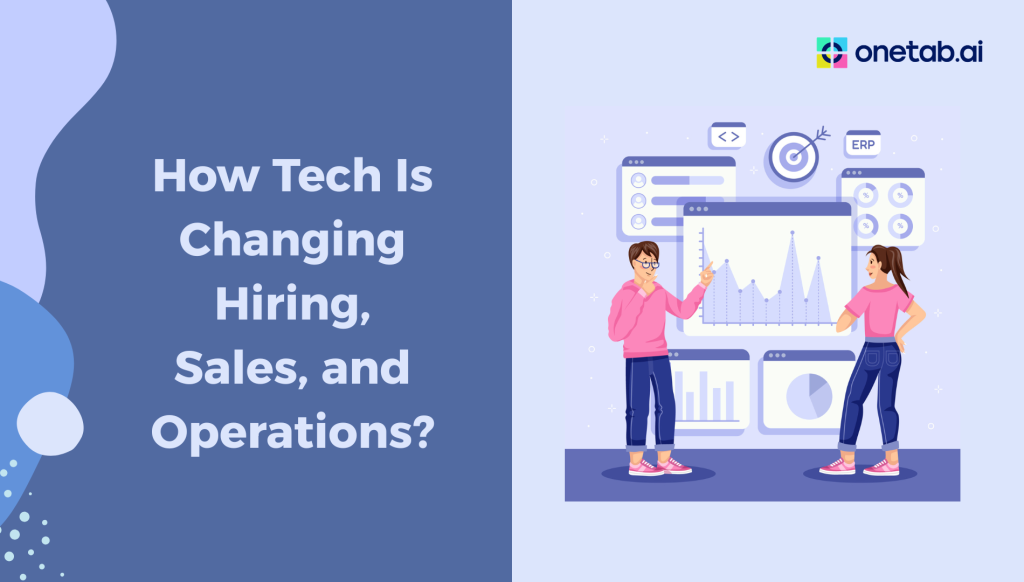
Technology is no longer just a support function, it’s the backbone of how modern businesses run. From finding the right talent to closing deals faster and streamlining internal workflows, tech is reshaping every core business function.
But this shift isn’t just about adopting tools, it’s about rethinking how work gets done.
Let’s break down how technology is transforming hiring, sales, and operations and what it actually means for businesses today.
Hiring: From Resume Screening to Intelligent Matching
Hiring used to be a manual, time-consuming process posting jobs, screening hundreds of resumes, and conducting repetitive interviews.
Today, technology has fundamentally changed that.
What’s changed:
- AI-powered resume screening tools like Onetab.ai filters candidates in seconds, not days
- Automated interview scheduling removes endless back-and-forth emails
- Skill-based assessments replace keyword-based hiring
- Predictive analytics helps identify candidates most likely to succeed
What it means:
Recruiters are no longer just screening resumes, they’re focusing on quality conversations and better decision-making.
The biggest shift?
Hiring is moving from guesswork to data-driven precision
Sales: From Cold Outreach to Intelligent Engagement
Sales has moved far beyond cold calls and generic email blasts.
Modern sales teams are now powered by data, automation, and real-time insights.
What’s changed:
- CRM integrations provide a 360° view of prospects
- AI-driven lead scoring identifies high-intent buyers
- Automated follow-ups ensure no lead falls through the cracks
- Conversation intelligence tools analyze calls and highlight buying signals
What it means:
Sales reps spend less time on manual tasks and more time doing what matters building relationships and closing deals.
The biggest shift?
Sales is moving from volume-based outreach to precision targeting
Operations: From Manual Workflows to Autonomous Systems
Operations is where technology often creates the biggest impact but gets the least attention.
From onboarding to internal processes, automation tools like Onetab.ai is eliminating repetitive work across teams.
What’s changed:
- Workflow automation tools handle repetitive tasks end-to-end
- Document processing AI extracts and verifies data instantly
- System integrations connect disconnected tools into one flow
- Real-time dashboards provide visibility into every process
What it means:
Teams can now operate with speed, accuracy, and scalability without constantly increasing headcount.
The biggest shift?
Operations is moving from manual execution to intelligent automation
The Bigger Picture: Everything Is Connected
What’s most interesting is not just how each function is evolving but how they’re becoming interconnected.
- Hiring data feeds into workforce planning
- Sales insights influence product and operations
- Operations data improves customer experience
Technology is breaking down silos and creating a unified, data-driven ecosystem across the organization.
But It’s Not Just About Tools
Here’s where many companies get it wrong:
They adopt new tools but keep the same old processes.
Real transformation happens when businesses:
- Rethink workflows (not just automate them)
- Train teams to work alongside technology
- Focus on outcomes, not just activity
Final Thought
Technology isn’t replacing hiring managers, sales reps, or operations teams.
It’s amplifying them.
The companies that win won’t be the ones with the most tools but the ones that know how to use technology to make faster, smarter decisions.
If you’re still relying heavily on manual processes in any of these areas, it’s not just inefficient it’s a competitive disadvantage.The question is no longer “Should we adopt tech?”
It’s “How fast can we adapt?”