From Clicks to Conversations: The New Interface of Commerce
Commerce is undergoing a fundamental interface shift. For two decades, the dominant paradigm was screen-based interaction search, scroll, click, checkout. Now, conversational AI is redefining the customer journey. Voice agents are no longer simple IVR systems; they are context-aware, intent-driven, transaction-capable systems that can guide, recommend, transact, and follow up – autonomously.
This evolution is commonly referred to as Conversational Commerce via Voice Agents.
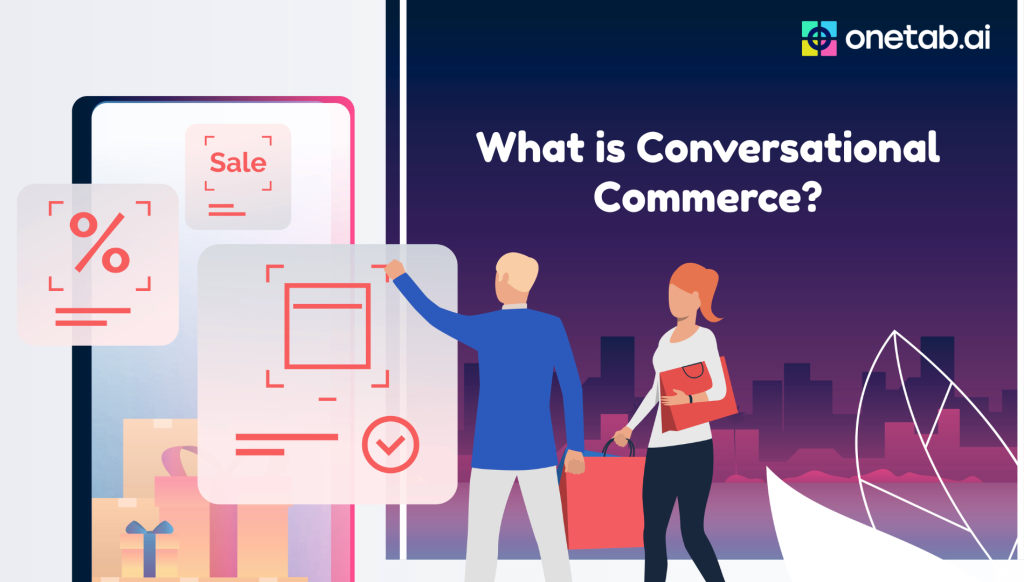
What Is Conversational Commerce?
Conversational commerce enables customers to interact with brands through natural language voice or chat to discover products, ask questions, complete purchases, track orders, and receive support.
Unlike traditional chatbots, modern voice agents:
- Understand contextual intent
- Maintain multi-turn dialogue
- Integrate with CRM, ERP, and payment systems
- Execute transactions in real time
- Personalize recommendations dynamically
Platforms like Amazon (via Alexa) and Google (via Assistant) pioneered consumer adoption. However, enterprise-grade voice agents are now expanding into retail, BFSI, healthcare, logistics, and B2B commerce.
Why Voice Is Gaining Momentum?
A. Frictionless Buying Experience
Voice removes navigation complexity. Customers don’t browse, they ask.
B. Mobile-First Behavior
Consumers increasingly interact via hands-free environments- cars, homes, workplaces.
C. AI Maturity
LLMs + Speech-to-Text + Text-to-Speech models now support near-human interaction quality.
D. Conversion Optimization
Conversational flows reduce drop-offs by proactively handling objections and clarifying product information in real time.
The Architecture Behind Voice Commerce
Enterprise voice agents typically include:
- ASR (Automatic Speech Recognition) – Converts voice to text
- LLM / NLP Engine – Interprets intent and context
- RAG Layer – Retrieves product, pricing, or policy data
- Workflow Orchestrator – Executes backend actions (order placement, payment link generation, CRM updates)
- TTS (Text-to-Speech) – Delivers human-like responses
The differentiator is not speech, it is orchestration.
Modern systems don’t just answer questions. They:
- Check inventory
- Apply discounts
- Generate invoices
- Schedule deliveries
- Update CRM records
- Trigger follow-up messages
Industry Use Cases
Retail & E-commerce
- Personalized upselling
- Cart recovery calls
- Order tracking automation
BFSI
- Loan eligibility checks
- Policy explanation
- EMI reminders
Healthcare
- Appointment booking
- Insurance validation
- Follow-up reminders
B2B
- Quote generation
- Vendor onboarding
- Payment reconciliation calls
Business Impact Metrics
Organizations deploying AI voice commerce typically report:
- 30–50% reduction in support costs
- 2x faster response times
- Increased cart recovery rates
- Higher NPS due to instant assistance
- 24/7 scalable engagement
Voice agents shift commerce from reactive support to proactive revenue generation.
Onetab AI: Enabling Enterprise-Grade Conversational Commerce
While many tools provide voice automation, few deliver end-to-end workflow execution.
Onetab.ai enables businesses to deploy AI voice agents that go beyond scripted flows.
What Makes Onetab AI Different?
Autonomous Workflow Execution
Voice agents integrated with CRM, ERP, payment gateways, and HCM systems—executing complete processes, not partial responses.
Real-Time Data Orchestration
AI agents retrieve structured and unstructured data to provide accurate, context-aware responses.
KPI-Driven Intelligence
Track:
- Call completion rate
- Qualification accuracy
- Revenue per interaction
- CRM auto-fill accuracy
- Escalation quality
Industry Customization
Retail, BFSI, HR tech, and enterprise operations can deploy domain-specific AI agents tailored to compliance and workflow requirements.
The Strategic Shift
The future of commerce will not be app-centric. It will be conversation-centric.
Brands that integrate voice agents into their revenue stack will gain:
- Faster conversion cycles
- Lower operational costs
- Higher personalization
- Continuous customer engagement
Conversational commerce is not replacing websites, it is augmenting them with an autonomous layer.And platforms like Onetab.ai are positioning enterprises to move from static interfaces to intelligent, action-oriented AI ecosystems.