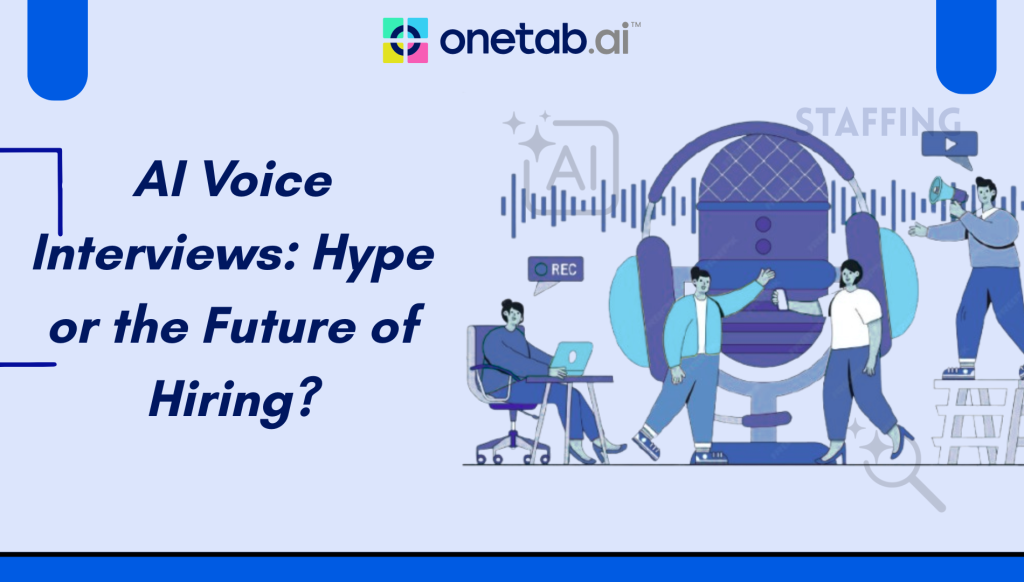
In today’s fast-paced talent landscape, hiring teams and candidates alike are under pressure to move faster, make better decisions, and ensure fairness and consistency. Traditional hiring methods, resume screening, in-person interviews, and manual note-taking can be time-consuming, subjective, and inconsistent. Enter AI voice interviews: an emerging tool that promises to reshape how organizations evaluate candidates.
Why Voice Matters in Hiring Today
A resume can tell you what someone has done. A voice interview begins to reveal how someone thinks, communicates, and responds under pressure. Here’s why voice matters:
1. Richer Signaling of Candidate Fit
Voice carries nuance tone, clarity, confidence, and even emotional intelligence. These signals are often critical for roles requiring communication, leadership, client interaction, or customer service.
2. Scalability and Consistency
Live interviews are resource-intensive. Scheduling conflicts, fatigue, and interviewer bias can warp hiring decisions. An AI voice interview system can evaluate many candidates consistently, reducing human bottlenecks.
3. Objectivity and Bias Mitigation
Structured voice evaluations when designed correctly and ethically can reduce subjective interpretation by human interviewers. The system can focus on predefined criteria rather than gut impressions.
4. Better Candidate Experience
Candidates increasingly expect prompt feedback and flexible interview formats, especially in remote or hybrid hiring environments. Voice interviews that can be completed on demand fit this expectation well.
With this backdrop, it’s worth asking: Are AI voice interviews just hype, or are they the future? Let’s explore how they actually work through a practical example.
AI Voice Interviews in Practice: How Onetab.ai Handles Them
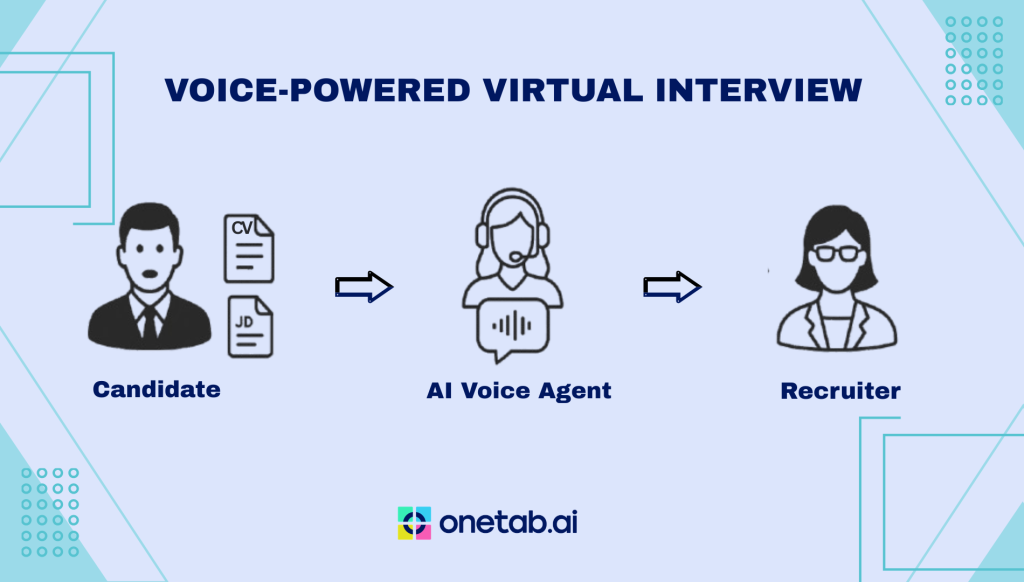
Onetab.ai is a platform that embraces next-generation hiring technologies including AI-powered voice interviews to empower recruiters with deeper insights and faster hiring cycles. Here’s how the process typically unfolds:
1. Candidate Receives Voice Interview Request
Once a candidate advances to the voice stage, they receive a prompt with pre-set audio questions that align with the competencies being evaluated such as problem-solving, communication, or leadership.
2. The Candidate Responds Using Spoken Answers
Instead of typing responses, candidates speak their answers. The platform captures these audio responses, either in real time or via upload.
3. Advanced AI Analysis
The AI engine processes both content and delivery:
- Semantic analysis of what was said (relevance, depth, structure).
- Prosody and vocal attributes (clarity, pace, confidence).
- Behavioral cues that correlate with defined hiring competencies.
The AI doesn’t just “transcribe” it interprets based on calibrated models trained on performance patterns relevant to the job. This yields a structured report highlighting strengths, suggested areas for development, and comparative insights across candidates.
4. Recruiters Get an Insightful Report
Instead of spending hours reviewing recordings manually, recruiters receive a detailed report that includes:
- Candidate’s response quality scores
- Key strengths and areas of concern
- AI-generated behavioral insights
- Transcript with timestamped highlights
This report informs hiring decisions and supports follow-up interview focus areas.
Human or AI-Generated Voice: Flexible Options for Recruiters
Not all interviews need to be fully automated or AI-moderated. Onetab.ai offers flexibility:
1. Live Human-Led Interviews
If a recruiter prefers to conduct the interview live (in person or remote), they can still leverage the system:
- Record the conversation
- Upload the audio to the platform
- Receive a full analytical report
This means human intuition and nuance remain part of the hiring process, but with the added benefit of structured AI analysis after the fact.
2. Hybrid Interview Workflows
An organization might choose early rounds as automated AI voice interviews, then switch to live human interviews later. Onetab.ai supports both workflows seamlessly.
Advantages & Considerations
Pros
- Speed: Faster screening of larger candidate pools.
- Consistency: Standard questions and evaluation criteria.
- Insightful Analysis: Detailed reports beyond plain transcripts.
- Accessibility: Candidates can complete responses at their convenience.
Challenges
- Bias Risk: If the underlying AI models aren’t properly validated, there’s a risk of reinforcing stereotypes or penalizing legitimate speech variations.
- Privacy & Consent: Recorded voice data must be handled ethically and securely.
- Candidate Comfort: Some candidates may perform differently in asynchronous recorded interviews versus live interaction.
Conclusion: Hype or the Future?
AI voice interviews are not just hype; they reflect a broader shift toward data-enhanced, candidate-friendly, and scalable hiring practices. Platforms like Onetab.ai show how technology can augment human judgment rather than replace it, giving recruiters a more objective lens while preserving flexibility for live human touchpoints.In an era where talent decisions matter more than ever, voice-based AI evaluations are fast becoming a strategic advantage especially when implemented thoughtfully with fairness and transparency.