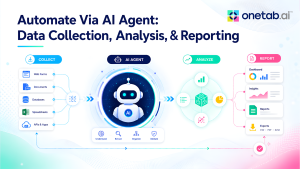
Businesses today are under constant pressure to move faster, reduce operational costs, and make smarter decisions at scale. Traditional automation helped streamline repetitive tasks, but it often lacked adaptability and intelligence. That’s where AI agentic and automation workflow platforms are changing the game bringing systems that don’t just execute tasks, but think, decide, and act autonomously.
What Is an AI Agentic Platform?
An AI agentic platform goes beyond rule-based automation. It leverages advanced AI models to create intelligent agents that can:
- Understand context and intent
- Make decisions based on data
- Learn and improve over time
- Execute multi-step workflows independently
Unlike static automation tools, these platforms behave more like digital employees capable of handling dynamic scenarios without constant human intervention.
From Automation to Autonomy
Traditional workflow automation follows predefined rules:
If X happens → Do Y
AI agentic systems introduce a new paradigm:
Understand X → Analyze options → Decide Y → Execute → Learn from outcome
This shift from deterministic workflows to adaptive intelligence is what defines the future of work.
Key Capabilities of AI Workflow Platforms
1. Intelligent Decision-Making
AI agents analyze structured and unstructured data to make real-time decisions whether it’s shortlisting candidates, prioritizing leads, or resolving customer queries.
2. End-to-End Workflow Automation
From input to execution, these platforms handle entire processes:
- Data ingestion
- Processing and validation
- Decision logic
- Action execution
3. Continuous Learning
Unlike traditional systems, AI workflows improve over time by learning from:
- User behavior
- Outcomes
- Feedback loops
4. Multi-System Integration
They seamlessly integrate with existing tools like CRMs, ATS platforms, ERPs, and communication tools enhancing workflows without requiring system replacement.
Real-World Use Cases
Recruitment & HR
- Automated resume screening and ranking
- Candidate engagement via AI agents
- Interview scheduling and follow-ups
Sales & Lead Management
- Instant lead qualification
- Personalized outreach at scale
- Smart follow-ups based on buyer intent
Customer Support
- 24/7 AI-driven support agents
- Query resolution without human intervention
- Escalation handling with context awareness
Operations & Back Office
- Invoice processing
- Data reconciliation
- Workflow approvals
Why Businesses Are Adopting AI Agentic Platforms
Speed at Scale
AI agents can handle thousands of workflows simultaneously, something human teams cannot match.
Cost Efficiency
Reduces dependency on large operational teams while improving output quality.
Consistency & Accuracy
Minimizes human error and ensures standardized execution across processes.
Enhanced Productivity
Teams can focus on strategic work while AI handles repetitive and decision-heavy tasks.
Challenges to Consider
While the benefits are significant, implementation requires careful planning:
- Data quality: AI decisions are only as good as the data they receive
- Workflow design: Poorly structured processes can limit effectiveness
- Change management: Teams need to adapt to working alongside AI
Organizations that approach AI adoption strategically gain the most value.
The Future of Intelligent Work
AI agentic platforms are not just tools, they represent a shift toward autonomous enterprises where systems collaborate with humans to drive outcomes.
In the near future, businesses will rely on:
- AI agents managing entire departments
- Real-time decision-making across functions
- Fully integrated, self-optimizing workflows
The companies that adopt this model early will gain a significant competitive advantage.
Conclusion
AI agentic and automation workflow platforms are redefining how work gets done. By combining intelligence with automation, they enable businesses to operate faster, smarter, and more efficiently than ever before.The future isn’t just automated, it’s autonomous.
 Yashita Maltare